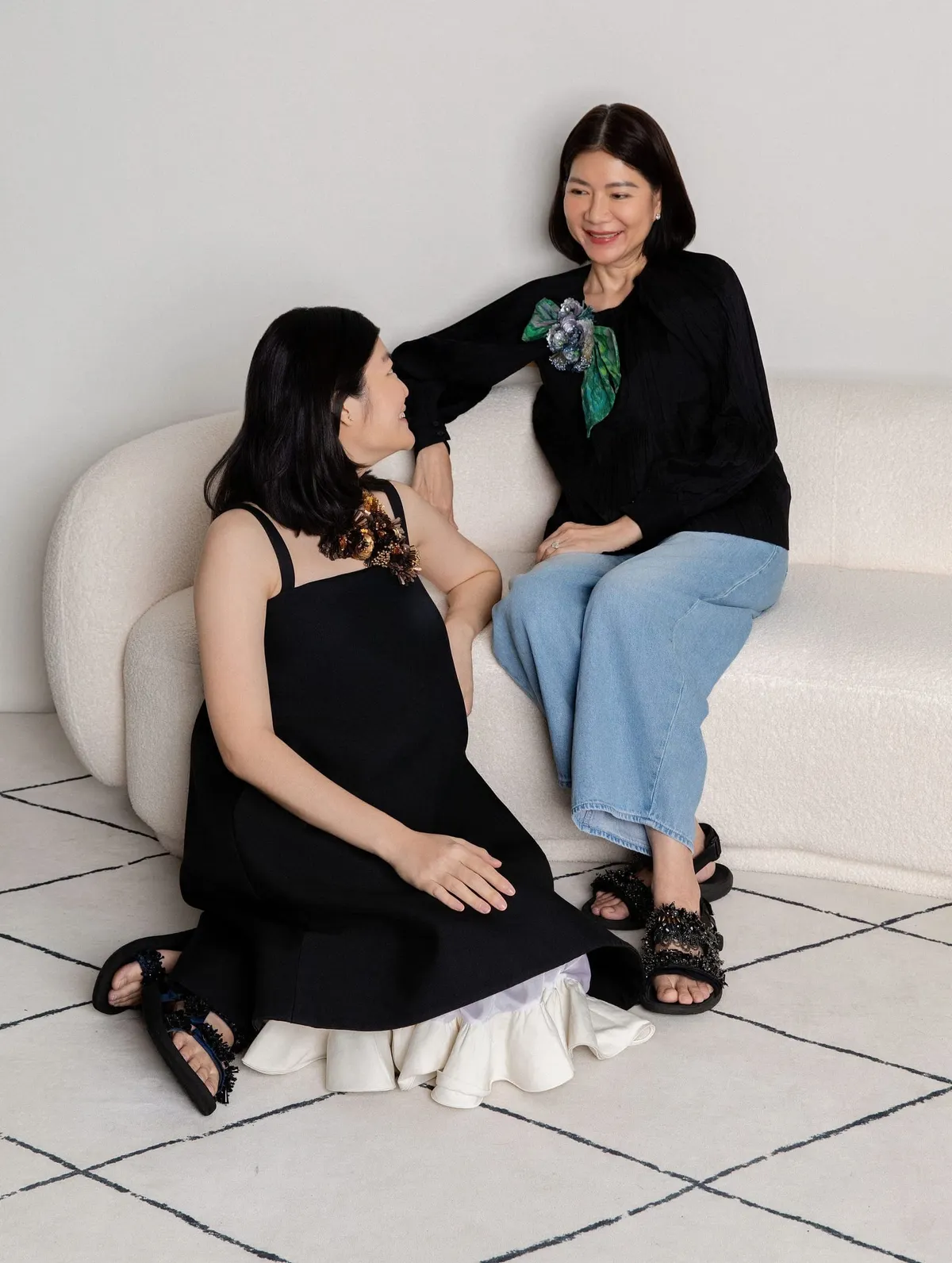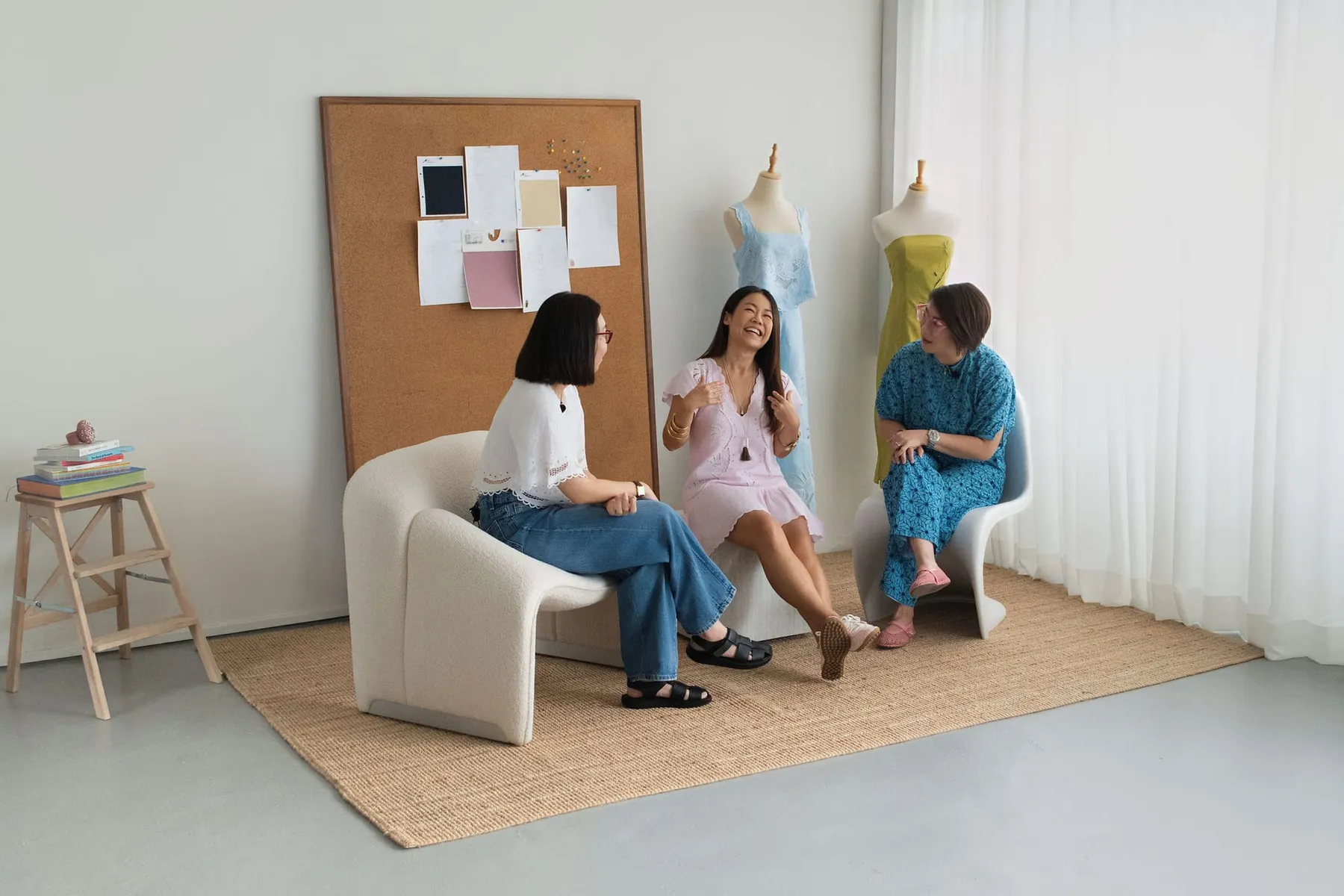
Before the interview started, she asked for water. “Sorry. My mouth very dry. Nervous.” We have known Danelle since 2010. We have watched her show at the National Gallery and saw her take her label into more than 200 stores internationally. She sat in front of two old friends and a camera, and her mouth went dry.
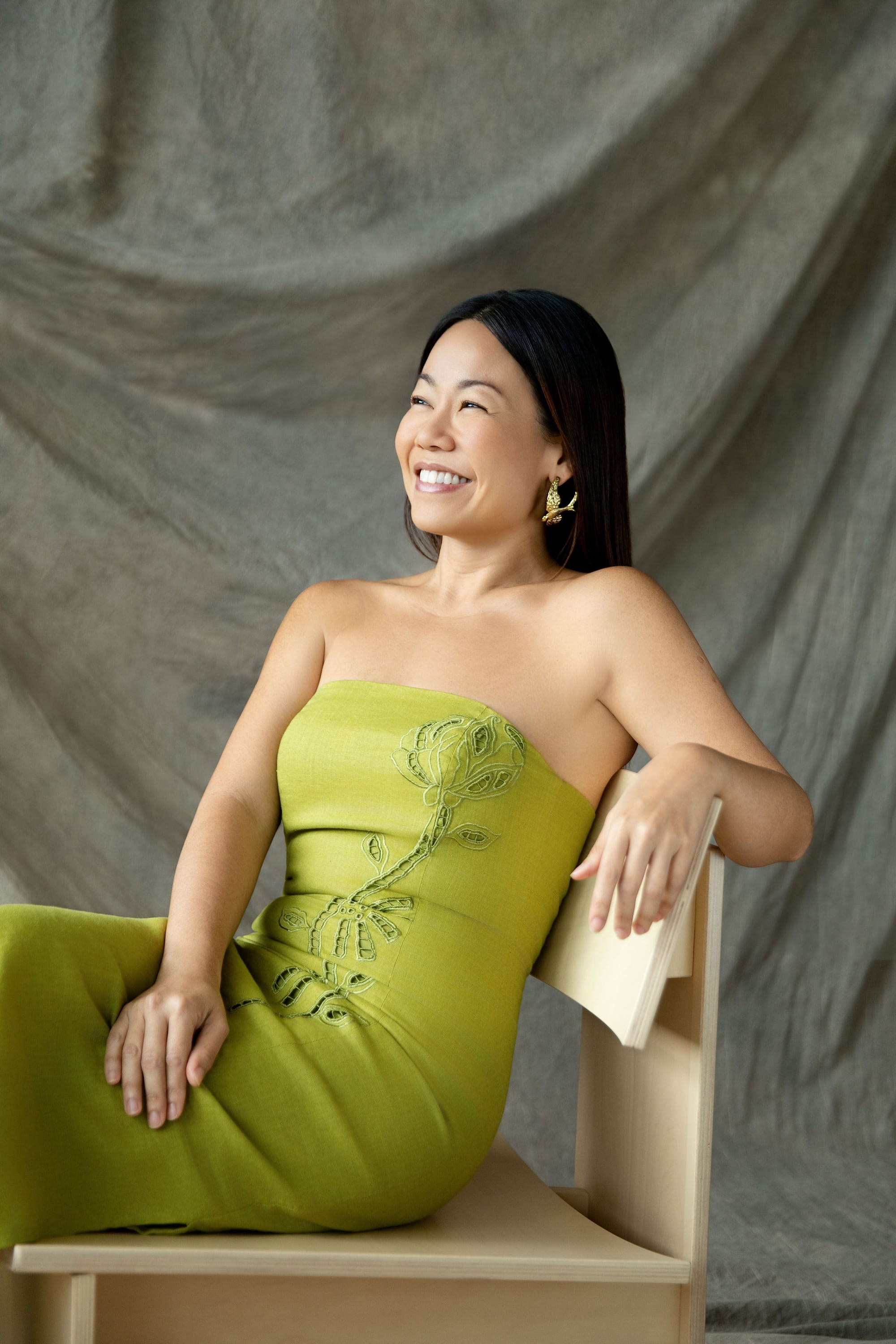
Then she started talking, and the woman we had come to see slipped away again. She told us about plant-based fibres and natural fabrics. As a shopper, she said, she finds a beautiful dress, turns it round and sees polyester. In the next shop it’s all linen and no personality. All of it was true, and none of it was about her.
We told her we wanted Danelle, not Aijek.
“Oh, you want me?” She looked genuinely surprised. “I thought you wanted the business.”
We can read about the business in the papers. This is about her.
“Does it work? Is it too much?”
Earlier, when we asked who made Danelle, she answered in the third person. “Danelle started with a passion for fashion. But as a Singaporean, Danelle didn’t dare to tell her mum, because it wasn’t something that would bring a lot of money.” She started working in shops at 14. At 17 she was at a European boutique full of labels she’d never heard of. She watched women walk in as one person and leave as another.
Sixteen years ago she was a new mum in Shanghai. She had quit her job, had no training and had a first collection she didn’t know how to finish. Chiew Ling went over for coffee and was shown a rail of samples. “I was lost,” Danelle remembers. “Does it work? Is it too much? What should I cut?” It was a twenty-minute visit. “But entrepreneurship is a very lonely journey, and it gave me the confidence that this could possibly work.”
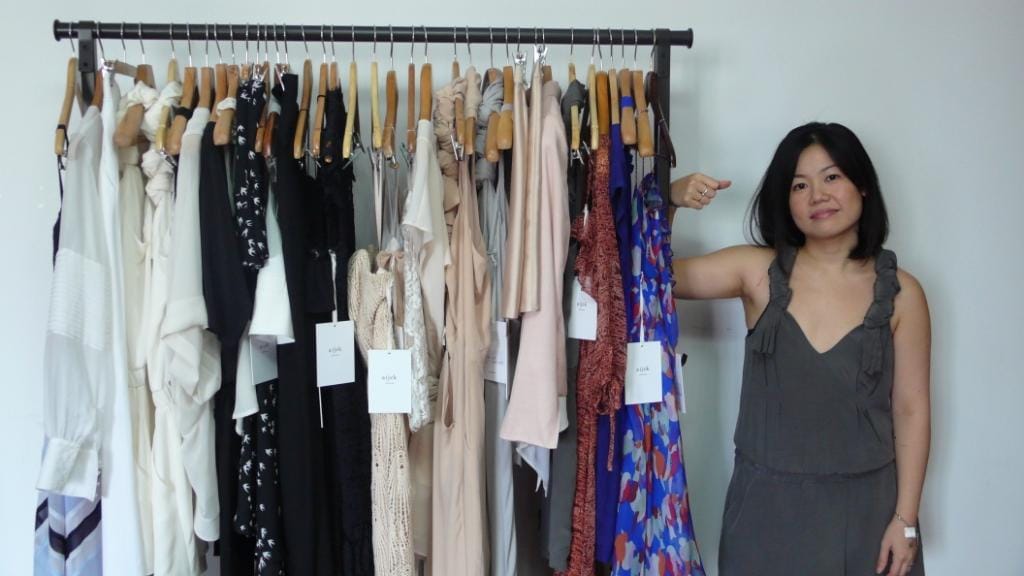
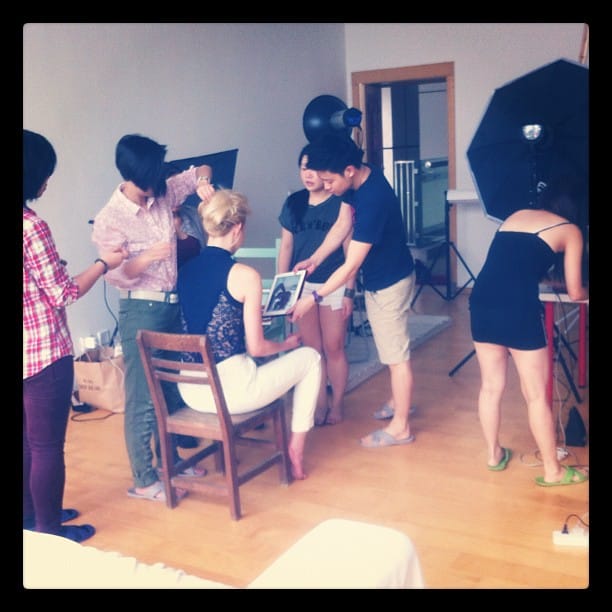
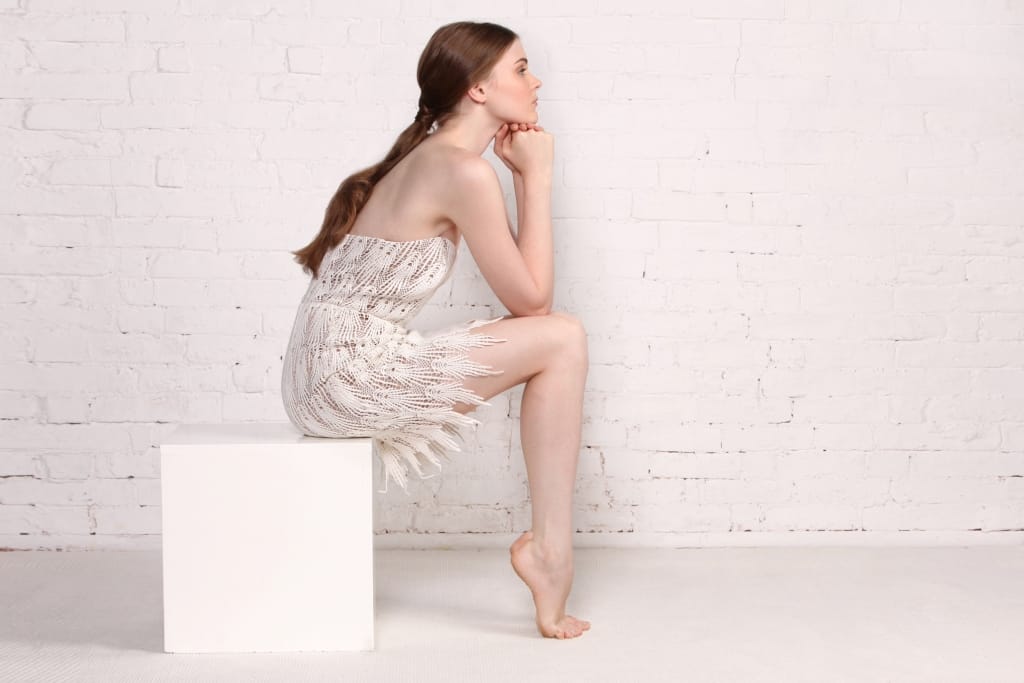
This year, about to start again, she asked herself a version of the same question - does she know how to do it and can she find it in her.
“I thought you wanted the business”
At a Singapore Fashion Council dinner this year, Danelle got to talking with a woman from Louis Vuitton about Seoul, where she used to live. Someone mentioned that Danelle had just relaunched her label. The woman asked which one, said “hang on”, and pulled up her wedding photo. She was wearing an Aijek dress, from the fifth or sixth collection.
Danelle was grateful, and she told us so. Then, she said, she felt the designer hat go straight back on. A minute earlier she had been a guest, enjoying a meal and the conversations around the dinner table.
“I’ve never felt very comfortable being the designer,” she says. “I’m probably the last fashion person in the industry. I would work, then go straight home.” She’s also quick to say she doesn’t make the clothes. “So many people think I make all the clothes. No. I draw.” She talks about the drafters and the sewers as people who are never seen. She accepts that she is the one people see but is never quite comfortable with the label.
“Just one more day with me”
She started Aijek when her son was one. When she stopped, he was about eleven.
“For ten years I was not able to play mum fully. Half the time was spent in the US or in China.” The maths was simple and it never worked. “If you’re at home being a mum, you’re not doing your best at work. If you’re doing that, then maybe you’re not the best friend, or the daughter. You’re always in tension, pulling in different directions.” Most fashion labels split the designer from the person who runs the business. She was both, and a mum.
He still remembers crying in bed. “Mummy, can you just leave the next day? Just spend one more day with me.”
She doesn’t tell that story to be forgiven. She tells it next to another one: he now looks back and tells her she built something. She hopes it shows him that success can be defined in more than one way.
When she stopped, she spent the seven years on the relationships she had been short-changing. “I learned to become a better mum, a better friend, a better daughter.” She calls these the things with long-term equity, and she means it as a businesswoman would.
“Free to dream without a goal”
Ask Danelle what she is, under all of it, and she answers before you finish. “I am actually a very big dreamer. I like to just stare into space and drift.” Sometimes she squints at a photograph until it blurs into a different dress, likes that one better, and starts drawing.
“I felt free.”
The business had no room for that. “Everything had a goal in mind.” So when she finally stopped in 2019, the word she reached for was free. “Free to just dream without a goal. At the end of the road there wasn’t another hundred new designs.”
She is honest about the other side of it. “This freedom can come with a lot of fear. There is no routine. There is no certainty. Then where do you head to?” She stayed with that question long enough to find something under it: “a stillness in yourself”, and room to look at who you actually are.
Did she know she’d come back? “It was a definite no. I was so tired.”
“You can be bad at something and still love it”
Danelle spent much of the seven years doing things she had no reason to be good at, on purpose. “We always get told, if you want to do this, you must be very good at it. But you can suck at it and still really enjoy it.” She surfs with her son in Bali, not well.
She took a full-time sewing course, so she would finally know what she had been asking of other people’s hands for a decade. “It’s so hard. I felt really bad for my sewers. Our clothes were very complicated.” She found it therapeutic but laughed when she said, “I’d probably never sew another dress again.”
And she volunteered at a hospice. “I feel like I don’t know about living if I don’t know how it is to die.” The first thing they teach you there, she says, is that the patients aren’t there to die. “They’re there to live the last days of their lives.”
She remembers a young couple. The husband was very ill, his eyes completely yellow, and his wife didn’t know what to do with herself. “We think about caring for the sick. But the caregiver is also going through the journey.” There was nothing to fix. “Sometimes it’s okay to just be there. You never know how big a difference you might make to somebody.”
None of it was preparation for coming back, but all of it turned out to be.
For years Danelle believed true sustainability was impossible when you manufacture. Not wanting to add to the landfill stopped her from restarting. “Then I read that plant-based fibres can start to break down within four to six months. My dad has grown all kinds of crops since he retired, so I gave him nine fabrics to bury. Six months later we dug them up.
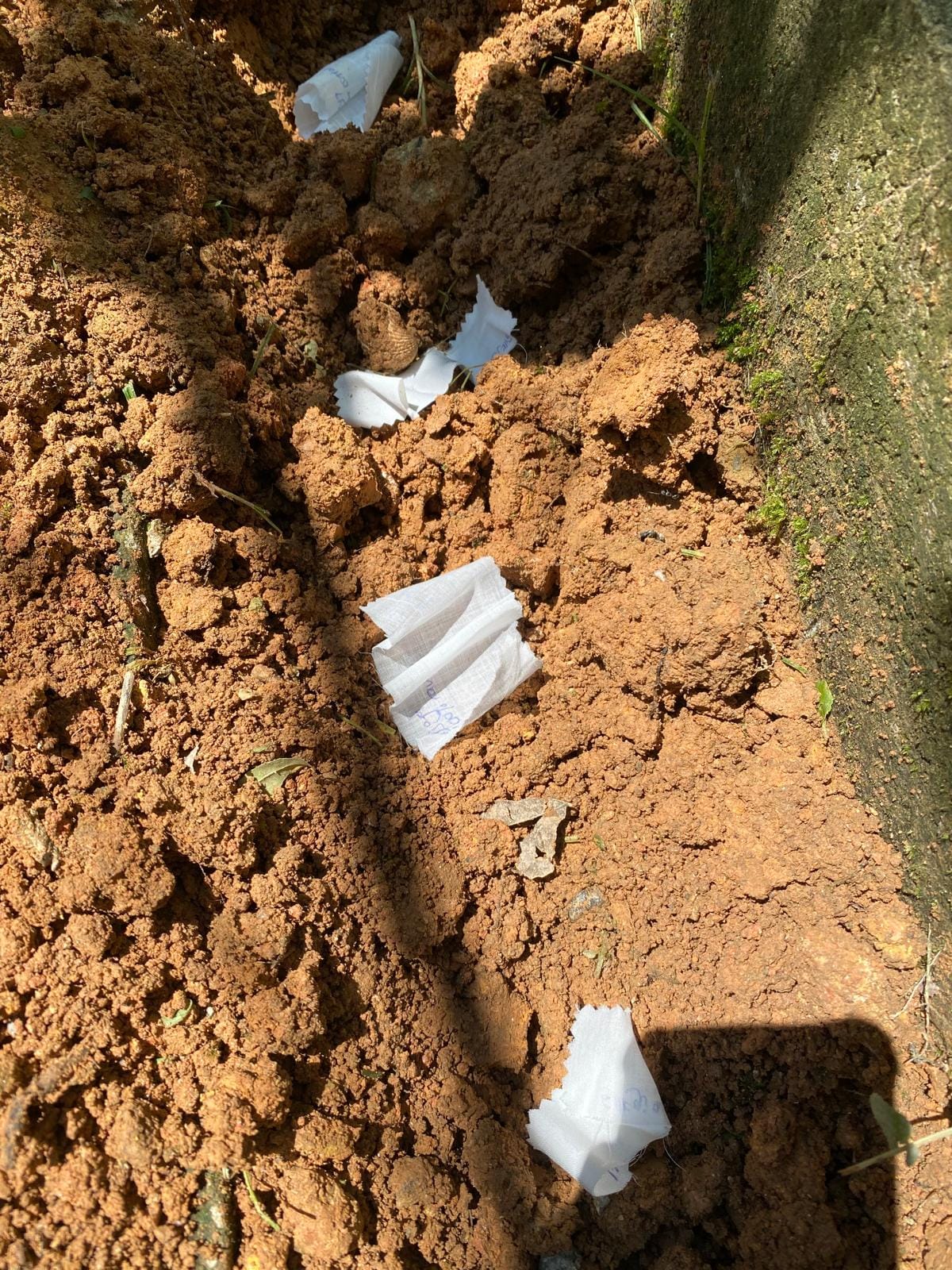
The only one left was the synthetic. Everything else had gone. That was the turning point. I could create again if I designed with the end in mind.”
Let the craft take control
The new Aijek is embroidered by a workshop in Bali, which she tracked down after months of being ignored. The owner started it on her own in her twenties and still handles Danelle’s account herself in her seventies. Nobody spoke English. Nothing is done by computer - the drafting, the cutting and the drying are all by hand. Danelle brought in new processes. “Rejected, rejected, rejected.”
“They don’t mind missing my business,” she says. “Slowing down is against our grain as Singaporeans. Everything is fast, fast, fast. They are teaching me to let go, and let the craft take control.”
That seems to be why the kerawang embroidery that is the signature feature in Aijek’s new collection is so compelling. The lace-like beauty in kerawang is centuries old and passed down through generations. The Ibus (term for elder women in Bahasa Indonesia) embroider it on old machines worked by hand and foot. Then parts of the fabric are cut away to make the openwork. No two pieces are alike, because each artisan leaves something of herself behind.
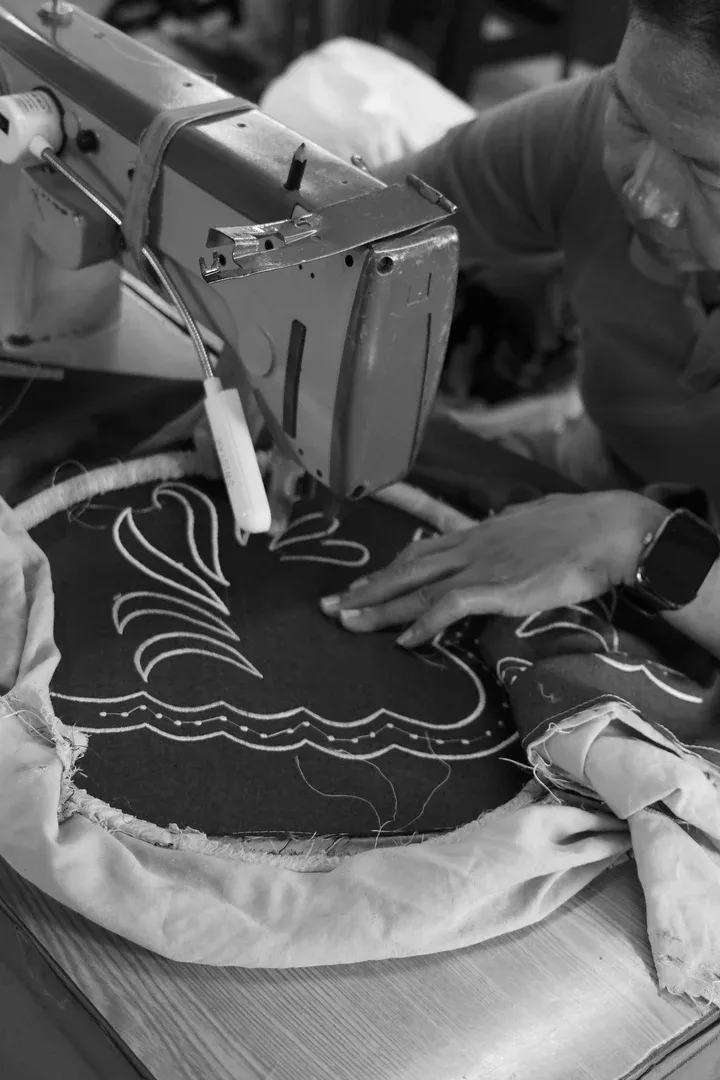
“With all the tech in the world today, nothing replaces the touch of human hands. Most of us don't need more clothes. But a dress that went through fifteen steps, with joy and childcare and tears around the table, means something.”
Still, she is coming to terms with taking it slow. And she doesn’t pretend she has. When we asked what the Danelle of ten years from now would tell her, she started with “slow down a little bit”, then caught herself. “But cannot all slow. I cannot live. Must still have a bit of momentum.”
There were still things for me to find
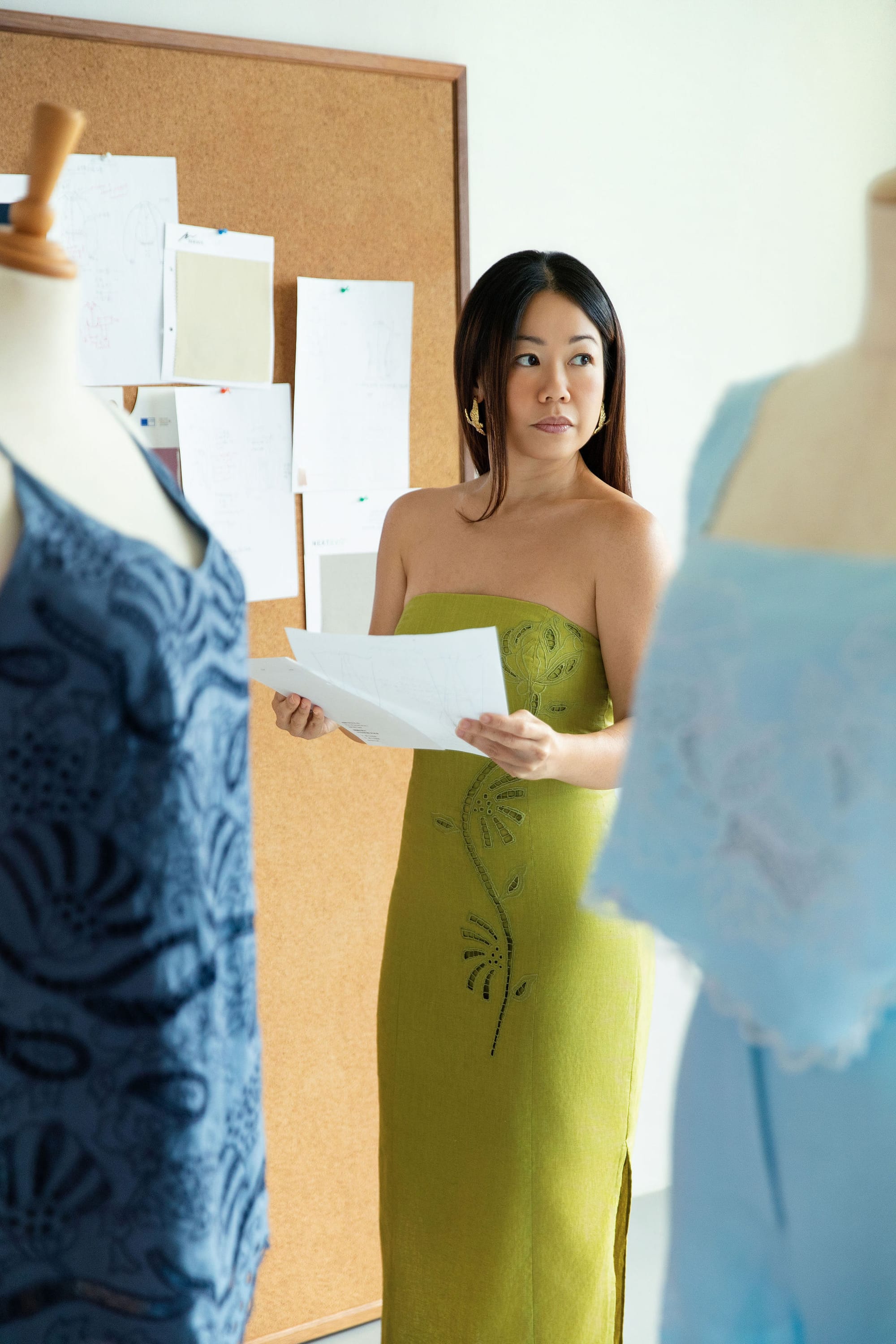
The Danelle of 2010 wanted the next order, the next milestone and she got them. The Danelle of 2019 has had enough. The one who sat with us this year wants something harder to name. She knows she isn’t going to be the designer who stays home and drifts, or the mum who is never away. She has stopped trying to choose.
“Sometimes you feel like you’ve lived half your life,” she said, “but the best has yet to come. There was still potential. There were still things for me to find.” She came back because she wanted more, but not more stores. She wanted a way to be all of herself at once. “Now I feel there’s a way to be in harmony, and bring it back in a way that resonates with the person I am now.”
We asked what she would tell the Danelle who showed Chiew Ling those first sketches. “She was really not confident about what she does,” she said. “I see a lot of that still in me now.”
What would she like the Danelle of ten years from now to tell her?
“Good job. Good job. You’re doing okay.”
We know a little about it ourselves. Three women, the same starting year, the same slow way back. Entrepreneurship is lonely, Danelle told us. It is a little less lonely when your friends have walked the same road.
She chose the lotus for Unfold because its seeds can sleep for centuries and still bloom. Seven years is nothing to a lotus.
Aijek’s new collection, Tomorrow, launches with TONG on 4 November. Come meet the woman behind it – and ask her about the garden.
Find themAijek, Singapore
aijek.com · @aijek_official